It is 6:40 in the morning at Salvador airport and you are watching a couple drag two hard-shell suitcases toward the taxi rank. We know exactly where those suitcases are going to end up: on the shoulder of a dock worker in Valença, then across the gunwale of a speedboat, then on a wheelbarrow in the sand at Boca da Barra. Packing for Boipeba is not like packing for a resort with a lobby. There is no road to the island, there are no cars once you land, and the last leg of every route is a boat. What you bring, you carry.
This is the list we hand our guests before they fly, written after years of watching what gets used, what gets left in the wardrobe, and what people wish they had bought in Salvador. It is opinionated on purpose. If you want the short version: pack light, pack for humidity, and bring cash.
Start with the bag itself
The single most important decision is not what goes inside. It is the bag. A 40-litre backpack or a soft duffel with a shoulder strap will make your arrival day noticeably calmer than a rolling suitcase. Here is why, in the order you will meet each obstacle:
- The Valença pier. You step from a van onto a concrete quay, then down into a fast boat. Bags get passed hand to hand. Wheels do nothing.
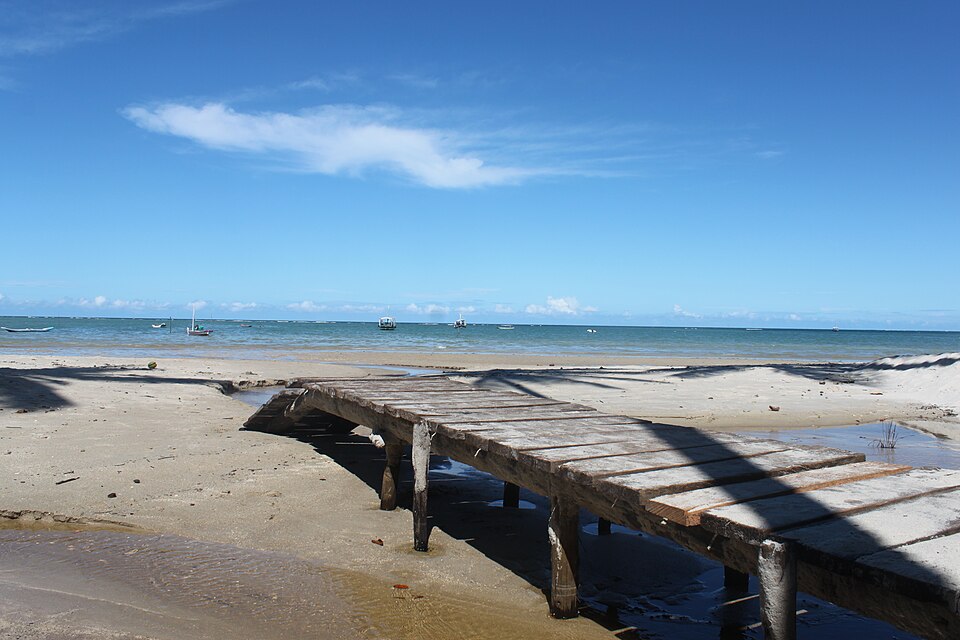
- Boca da Barra. The boat noses onto sand or a small wooden jetty depending on the tide. From there it is a short walk on sand and cobbles to Velha Boipeba.
- The village. Streets are sand, packed earth or old stone. Wheels sink or rattle.
If a suitcase is the only option you own, do not panic. Wheelbarrow carriers meet the boats and will move it for a few reais. We can also arrange it ahead of time, which is one of the reasons we ask for your arrival time when you book. Read our page on getting here for the timing of the last boat, because a heavy bag and a missed boat is the worst combination of the trip.
Inside the main bag, use two or three packing cubes or zip bags. Humidity in Boipeba sits high for most of the year, and a bag that is opened on a beach and closed in a damp room will smell of sea within two days. Packing cubes keep clean clothes sealed.
Clothes: less than you think, and nothing that needs ironing
Our guests who stay a week rarely wear more than five outfits. The island runs on shorts, swimwear and one set of clothes for dinner. Here is a week for one person that fits in a carry-on:
| Item |
How many |
Why |
| Swimwear |
2 or 3 |
One is always wet. Salt and sand wear elastic fast. |
| Quick-dry shorts |
3 |
Doubles as beach and village wear. |
| Light shirts or tops |
4 or 5 |
Linen or thin cotton. Nothing synthetic that traps heat. |
| Long light trousers |
1 |
Mosquitoes at dusk, and the boat ride can be windy. |
| Light sweater or long sleeve |
1 |
The catamaran from Salvador and the speedboat at 7 am can be cold. Yes, cold. |
| Underwear |
7 |
Cheap to bring, annoying to run out of. |
| Sandals that survive water |
1 pair |
Havaianas or similar. You will live in them. |
| Closed shoes or trail sandals |
1 pair |
For the walk to Ponta dos Castelhanos and any trail. |
| Sun hat |
1 |
Wide brim beats a cap on the boat. |
| Sarong or light towel |
1 |
Beach towel, picnic blanket, curtain, shoulder cover. |
Skip jeans, skip anything that needs a hanger, skip heels. Boipeba restaurants are sand floors and wooden tables. Nobody dresses up, and the one time you try, the humidity will undo it.
A note on rain. Between April and July the island gets its wettest months, and a shower can arrive in the middle of a clear afternoon at any time of year. A thin packable rain jacket weighs nothing and turns a soaked walk back from Cueira into a story instead of a problem. Umbrellas are useless on the boat and in the wind.
The things you cannot buy on the island
Velha Boipeba has small grocery shops, a couple of pharmacies with the basics, and stalls selling sarongs and sunscreen at island prices. It does not have a supermarket, a bank, an ATM, or a shop that stocks your specific brand of anything. Bring these from home or buy them in Salvador before you board the ferry:
- Insect repellent with DEET or icaridin. The mosquitoes come out at dusk near the mangroves and in gardens. Local shops sell repellent, but selection is small and prices are higher. Bring a full bottle per person for a week.
- Reef-safe sunscreen, SPF 50. The sun at 13 degrees south is stronger than most visitors expect. We watch people burn on their first day every single week. A 200 ml bottle per person per week is realistic.
- Prescription medication for the whole trip plus three days. There is a small health post in the village, open on weekdays, and the nearest hospital is in Valença, a boat ride away. Nobody will fill a foreign prescription here.
- A basic first-aid kit. Plasters, antiseptic, antihistamine, something for an upset stomach, rehydration salts, motion sickness tablets for the catamaran.
- Cash in reais. There is no ATM on Boipeba. Cards and Pix work in most restaurants and shops, but the signal drops and the machine fails at the exact moment you need it. We wrote a full guide on money in Boipeba. Withdraw in Salvador.
- Contact lens solution, specific toiletries, feminine products of your preferred brand. The pharmacy stocks Brazilian brands only.
- Chargers, adapters, a power bank. Brazil uses type N sockets, 127 V or 220 V depending on the building. Our flats have USB-C outlets, but bring your own adapter for anything else. A power bank matters because the electricity on the island occasionally drops.
The things you should leave at home
Every bag has a few items that made sense in a city and make no sense here.
- Jewellery you would cry about. Not because of theft, Boipeba is calm, but because salt water and sand destroy things, and rings slip off in the sea.
- A laptop, unless you are working. If you are, read our honest guide on internet and remote work in Boipeba before you promise anyone a video call.
- A hairdryer. Our flats have one, and the humidity will win anyway.
- Beach chairs and umbrellas. We keep a beach kit for guests, and every beach with a barraca will lend or rent them.
- Big bottles of water. Filtered water is in the flat. Bring one reusable bottle and refill it.
- More than one book. You will read on the boat, on the beach, in the hammock, and it still will not be more than one.
Beach day kit, the version that actually works
For the day trips to Moreré, Cueira or Castelhanos, the bag you carry is small and specific. We put this together every morning for our own family:
- A dry bag or a zip bag for phone, cash and keys. Boats splash. Waves surprise.
- Reef shoes or sturdy sandals if you plan to walk on the reef at Moreré at low tide. Coral cuts are the most common injury we see.
- Snorkel and mask if you own them. Rentals exist but are hit and miss.
- A sarong, sunscreen, repellent, a hat.
- Water and a snack. Beach barracas serve fresh fish and cold beer, but the walk to Castelhanos has long stretches with nothing.
- Small bills. The boat back, the coconut, the fried fish at the barraca all run on small change.
What to wear on arrival day
A separate word about the journey itself, because it is a long one. Whether you come by catamaran via Morro de São Paulo or by ferry and van via Valença, you will spend between five and eight hours in transit with wind, spray, sun and one or two stretches of waiting. Wear the long trousers and the light long sleeve, keep the rain jacket at the top of the bag, wear closed sandals rather than flip-flops for the pier steps, and keep your document, your cash and your phone in a pocket that closes. Put the swimwear on top of the bag: the first thing most people do after we hand over the key is walk to Boca da Barra and get in the water.
If you are arriving on an afternoon flight, read this before anything else: the last fast boat from Valença leaves at 4 pm. We explain every option, including sleeping in Salvador, on the how to get here page.
A checklist you can screenshot
Documents: passport, a printed or offline copy of your booking, travel insurance details, vaccination card if you carry one.
Money: cash in reais for the whole stay plus a margin, one card that works abroad, Pix set up if your bank offers it.
Health: prescriptions, first-aid kit, repellent, sunscreen, motion sickness tablets.
Clothes: five days of light clothing, two or three swimsuits, one long outfit, one warm layer, rain jacket, hat.
Feet: water sandals, closed shoes for trails.
Gear: dry bag, reusable bottle, power bank, adapter, snorkel if you own one, a small torch for the walk home on unlit lanes.
Comfort: earplugs (roosters exist), a sarong, one book.
Perguntas frequentes
Is there a laundry service on the island?
Yes. Several households in Velha Boipeba wash and dry clothes by weight, usually returned the next day, weather permitting. Ask our host and they will arrange pick-up. It is one more reason to pack less.
Can I buy sunscreen and repellent in Boipeba?
You can, in small shops and the pharmacies, but the selection is limited and prices are higher than in Salvador. Bring your own and treat island stock as a backup.
Do I need water shoes?
For the village and the main beaches, sandals are enough. For the natural pools at Moreré at low tide and for the reef stretches, water shoes prevent the cuts that ruin a holiday.
Is there a dress code anywhere?
No. Even the nicer restaurants in the village are barefoot-friendly. Bring one outfit you feel good in for dinner and you are covered.
What about a plug adapter?
Brazil uses the type N socket. Most modern chargers handle both 127 V and 220 V, but check yours. Our flats have USB-C outlets by the bed and the desk.
Pack light, land calm. When you are ready to see where all of this ends up, have a look at our flats in Velha Boipeba, two minutes from the pier where your bag finally gets to rest.