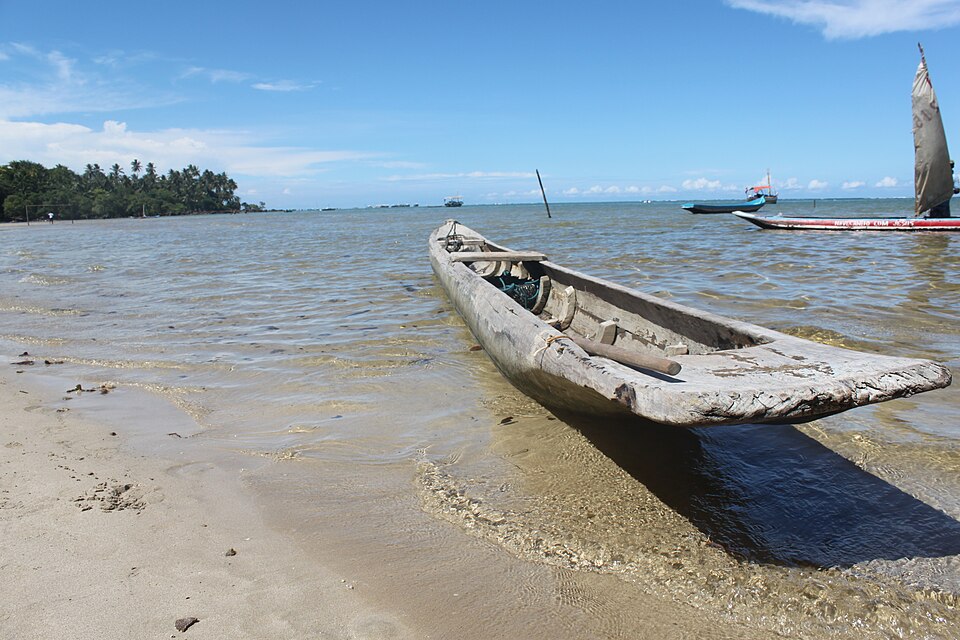
The speedboat cuts the engine and for a second the only sound is water slapping the hull. You are forty minutes south of Velha Boipeba, the coast has run out of houses, and in front of you there is a beach with nobody on it, a line of coconut palms, and a dark stain in the shallows that the boatman points at with his chin. "The Spanish ship," he says. That is Ponta dos Castelhanos, the last beach on Ilha de Boipeba, and this is the moment most people decide the trip was worth it.
Where Castelhanos is, and why you can't just walk there
Ilha de Boipeba is roughly 20 km long. Velha Boipeba, where our flats are, sits at the northern tip by the river mouth. Castelhanos is at the opposite end, the southern point, past Moreré and past the fishing village of Cova da Onça. Between the two there is no road for vehicles, only sand, mangrove and forest. A few very fit guests have walked it along the beaches at low tide, about four hours each way, but for almost everyone Castelhanos is a boat trip, and it should be: the approach from the water, along the whole east coast of the island, is half the point.
The name comes from 1535. A Spanish flagship, the Madre de Dios, hit the reef off this point and sank. Locals called the survivors "castelhanos", Castilians, and the name stuck to the beach. On a very calm day with good visibility, some dive operators take people to see what is left of the wreck on the reef. Most days you will see the reef itself, a long dark bar that turns the water inside it into a warm, shallow pool at low tide.
Two ways to do the trip
There are two boat trips that reach Castelhanos, and it matters which one you pick.
| Trip |
Route |
Time |
Price per person (2026, collective boat, approx.) |
| Castelhanos direct |
Boca da Barra → east coast → Castelhanos, lunch, return |
5 to 6 hours |
R$150 to R$250, about US$30 to US$50 |
| Volta à Ilha (around the island) |
Boca da Barra → Moreré pools → Castelhanos → Cova da Onça → mangroves → Cairu → back |
7 to 8 hours |
R$180 to R$355 depending on the route, about US$35 to US$70 |
Prices are what the collective boats charged in 2025 and early 2026; fuel and the season move them. Confirm with us the night before, because we ask the boatmen directly. A private boat for a family or a group of friends costs more per boat but can work out cheaper per person from six people up, and you decide the stops.
Castelhanos direct is the calmer day. You leave Boca da Barra between 9 and 10 a.m., ride the length of the island, swim and snorkel inside the reef for an hour or two, have lunch at one of the two or three beach restaurants, and come back mid-afternoon. It suits families and people who want time on the beach rather than a checklist.
Volta à Ilha is the classic. It circles the whole island: the Moreré natural pools first if the tide is low, then Castelhanos for lunch, then the west side through the Rio do Inferno mangroves and the colonial village of Cairu with its church and convent. It is a long day with a lot of engine time. Fantastic once; not a day for a two-year-old.
A quad-bike variant exists for the land half of the route, at similar prices, but the quads do not reach Castelhanos beach itself. Ask before booking.
What the beach is actually like
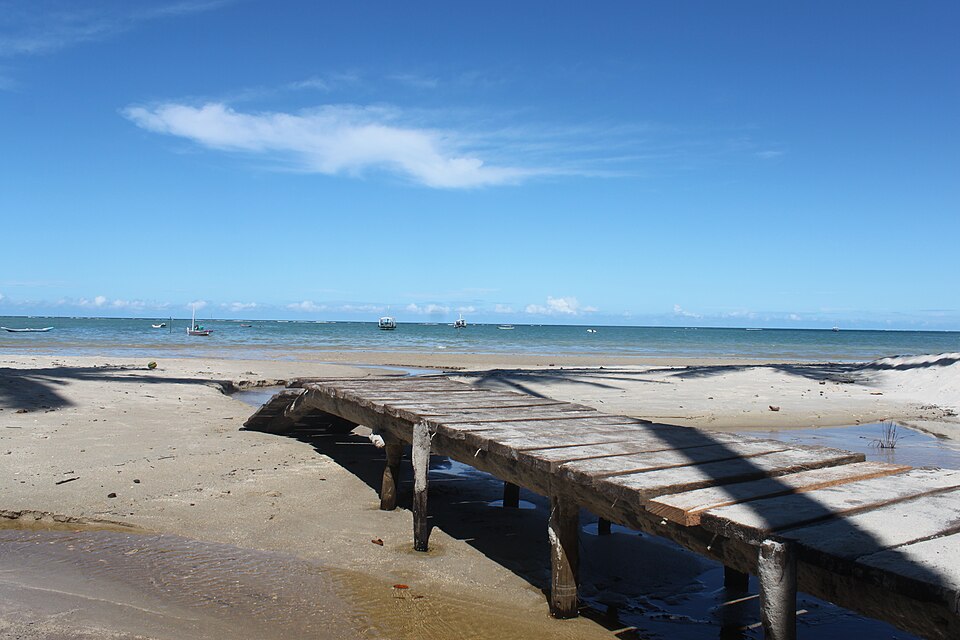
Long, wide, curved, backed by dunes and palms. The sand is fine and pale. The reef runs parallel to the shore about 100 to 200 m out and takes the swell, so inside it, at low tide, the water is flat and you can stand in it. At high tide the pool disappears and the water inside the reef gets deeper and moves more; still fine to swim, less good for snorkeling.
There is no village at Castelhanos, only a handful of restaurants and fishermen's houses. No pharmacy, no shop, no signal in most spots. Bring what you need from Velha Boipeba.
The restaurants serve what the boats bring in: grilled fish, moqueca, fried shrimp, lobster in season (the closed season runs roughly December to May; outside it, ask what day the lobster came in). A plate for two runs R$120 to R$220 in 2026. Beer and coconut water are cheaper than in Velha Boipeba's square. Most take cards and Pix, but the card machine depends on the signal, so carry R$150 per person in cash to be safe.
Snorkeling here, and how it differs from Moreré
People come back from a round-island day saying the pools at Moreré and the reef at Castelhanos are the same thing. They are not, and knowing the difference tells you which one to plan your tide around.
At Moreré the reef sits about a kilometre offshore and drains almost completely at a low low tide, so what you get is a set of shallow basins you stand up in, with coral heads breaking the surface and fish trapped around your ankles. You need a small boat to reach it.
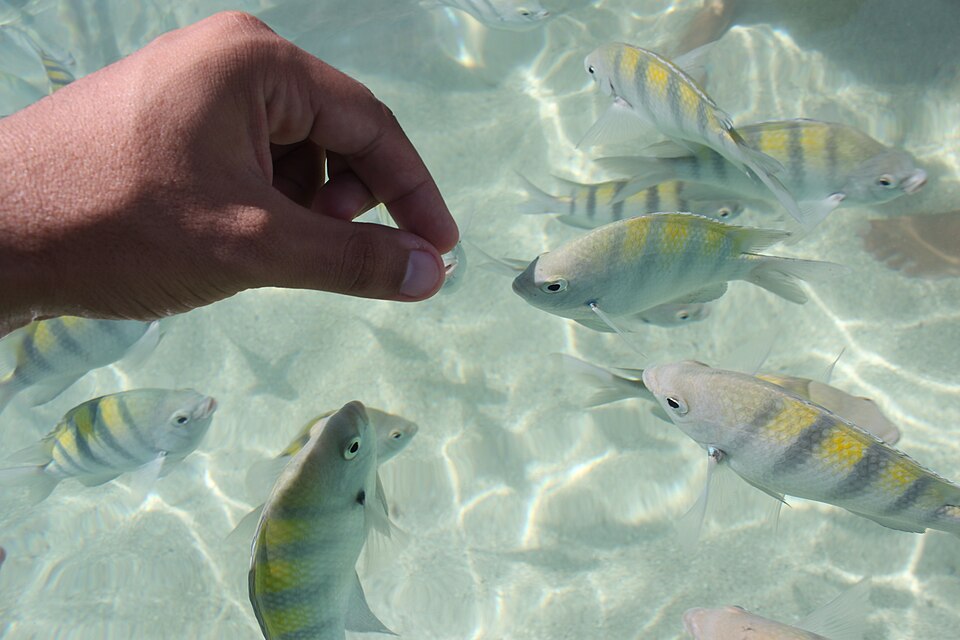
At Castelhanos the reef is much closer, 100 to 200 metres out, and the water inside it stays as a broad flat pool rather than draining into separate basins. You walk in from the sand. It is deeper, so you swim rather than stand, there is more open sandy bottom between the coral, and on a clear day the visibility is better because you are further from any river mouth.
Short version: Moreré is the better snorkel, Castelhanos is the better swim and the better beach. If the tide is only good on one morning of your stay, spend it at Moreré and come to Castelhanos on any day the sea is calm.
Timing it right
Two things decide the quality of your Castelhanos day: the tide and the wind.
- Tide. Low tide in late morning or early afternoon means you get the pool inside the reef at exactly the time you are on the beach. Check the Morro de São Paulo tide table; we keep it printed at the flats.
- Wind. The east coast of the island takes the trade wind. On a day of strong southeast wind the ride down is bumpy and the water inside the reef is cloudy. Boatmen will tell you at 7 a.m. if it is a bad day; believe them.
Best months: September to March for calm sea and visibility. April to July brings rain and rougher water; the trip still runs on most days, but the beach loses some of its color.
Collective boat or private boat
The collective boat is a fixed product: it leaves when it is full or when the schedule says, it stops where everyone stops, and it comes back when the last person is back on board. At R$150 to R$250 per person it is good value and it is what most people should book.
A private boat is priced per boat, not per seat, and the number moves with fuel, so we ask the boatmen the night before rather than publishing a figure we cannot stand behind. From about six passengers up it starts to make sense on price alone.
What you are actually buying is time. You leave at the hour the tide wants, not the hour the boat fills. You stay in the water for as long as you want to. You skip the stop you do not care about. With small children, or with someone who gets seasick and needs the trip cut short, that control is worth more than the money.
What it does not buy you is a calm sea. On a bad wind day the private boat bounces exactly as much as the collective one.
What to bring
- Cash, sunscreen applied before boarding, a hat that ties on.
- Mask and snorkel. We lend them to guests.
- Water shoes: the reef is sharp and the pool bottom has coral rubble.
- A dry bag. Spray comes over the bow on the way down.
- A long-sleeved shirt for the ride back. The sun at 3 p.m. on open water is stronger than it feels.
- Motion-sickness tablets if you know you need them. Forty minutes of chop on the way down is normal.
Leave behind: anything you cannot afford to get wet, and the drone, which is not allowed over the reef in the protected area without a permit.
There is a sand track through the interior of the island, and quad-bike taxis use it. Some drivers will take you to Ponta dos Castelhanos on it, and some routes sold as "Castelhanos" stop short of the beach itself at a viewpoint or at the edge of the track. Agree in the village, before you pay, exactly where you are being dropped and what time you are being collected. That one question prevents most of the complaints we hear about the land route.
On foot, there are two versions. From Velha Boipeba along the beaches it is about four hours each way at low tide, which is a serious day and only for people who leave at six in the morning with two litres of water. From Bainema, if you have already got that far, the walk to the point is roughly an hour and a half at low tide.
Either way: no shade, no shops, almost no phone signal, and a tide that has to be falling on the way out and not yet high on the way back. Tell someone where you are going. We would rather know.
The lighthouse at the end of the island
The southern point carries a lighthouse, and it is the thing that fixes Castelhanos in your memory: a white tower on the last piece of land, with reef on one side and open Atlantic on the other. It is not a visitor attraction and there is nothing to buy there. It is simply where the island stops, and standing under it is the closest thing Boipeba has to a full stop.
Cova da Onça, the stop on the way back
If you take the round-island trip, the boat pulls into Cova da Onça, a small fishing village of a few hundred people on the southern channel. There is a church, a football field, boats pulled up on the mud, and usually an older man selling coconuts. It is one of the few places on the island where you feel how people lived here before tourism. Buy something, say bom dia, do not photograph people without asking.
Is it worth it if you only have two days?
Yes, if the tide is right, and no, if it is not. With two days on the island we would rather send you to Moreré on the good tide morning and to Castelhanos on the other day than force both into one long loop. With three or more days, do the full Volta à Ilha once and go back to whichever beach you loved.
Frequently asked questions
How long is the boat trip from Velha Boipeba to Ponta dos Castelhanos?
About 40 to 60 minutes each way in a speedboat, depending on the sea. The full round-island trip takes 7 to 8 hours.
Can I see the shipwreck at Castelhanos?
Only with a dive operator on a calm day with good visibility; the wreck of the Madre de Dios (1535) is on the reef and not visible from the beach.
Are there restaurants at Ponta dos Castelhanos?
Yes, a few beach restaurants serving fish, moqueca and lobster in season, at roughly R$120 to R$220 per plate for two in 2026. Cash is safer than cards.
Can I reach Ponta dos Castelhanos without a boat?
Yes, by quad-bike taxi on the interior sand track, or on foot along the beaches, about four hours each way from Velha Boipeba at low tide. Agree the drop-off point and pick-up time before you pay.
Is Castelhanos good for kids?
At low tide the pool inside the reef is shallow and calm. The boat ride can be bumpy; keep the trip short and pick the direct route rather than the full loop.
Check how to get to Boipeba so your first day is not your only day, and see our flats two minutes from where the boats leave. Related reading: the Moreré tide guide and boat trips from Boipeba.