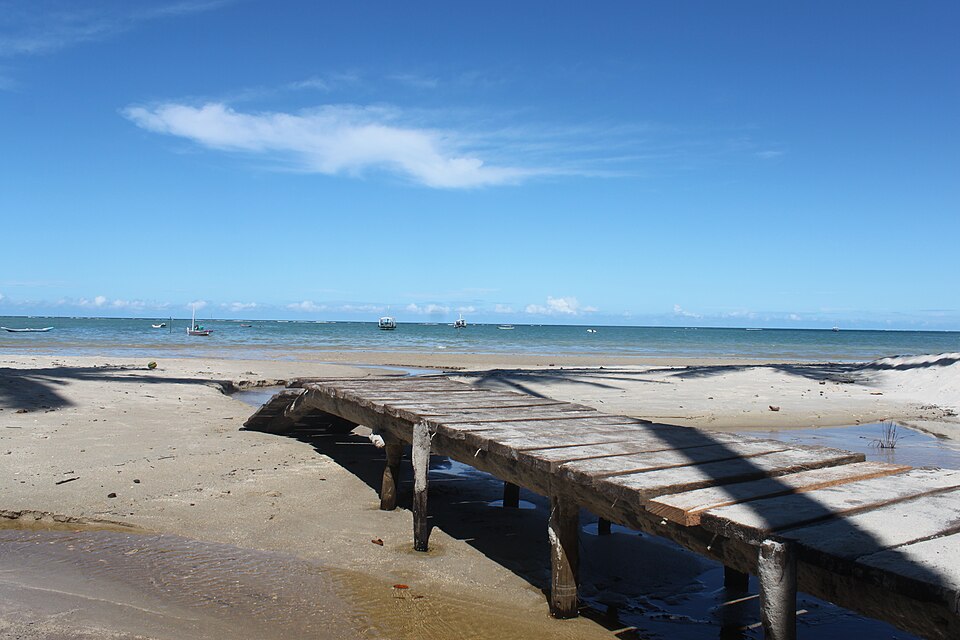
It's 6:40 in the morning and you are standing on the pier at Boca da Barra with a wet towel over your shoulder, asking the boatman the only question that matters today: what time is low tide? If he says "around nine, and it's a good one," you are about to see the Moreré natural pools the way the photos promise. If he shrugs and says "afternoon, and not very low," you should go back to bed, drink another coffee and go tomorrow. That is the whole secret of Moreré, and almost nobody tells you before you arrive.
What the Moreré natural pools actually are
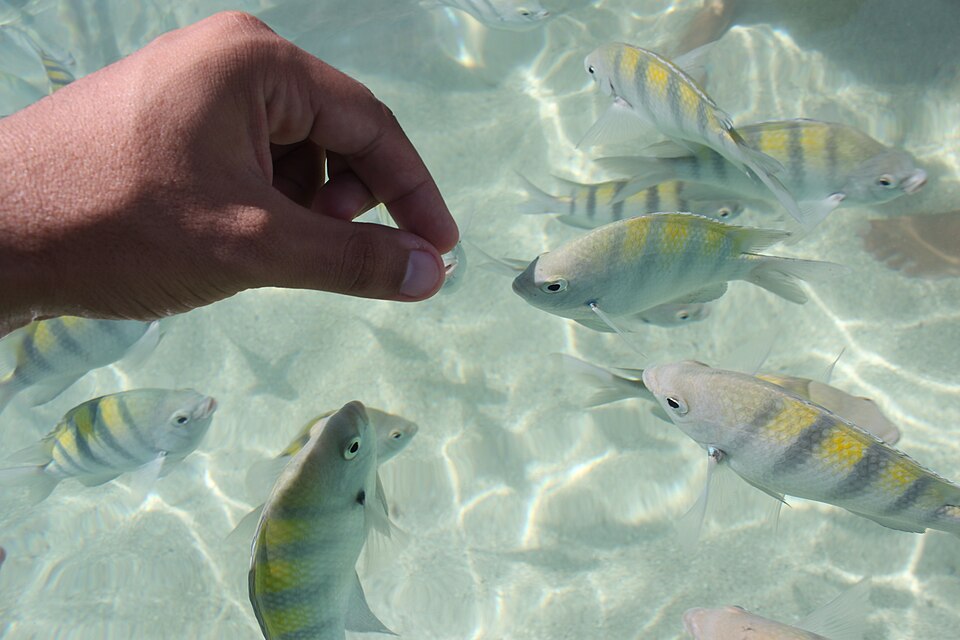
The pools are not a lagoon and not a beach. They are a stretch of coral reef about one kilometer off the coast of the village of Moreré, on the eastern side of Ilha de Boipeba. Twice a day the Atlantic pulls back, the reef breaks the surface, and shallow basins of clear, warm water appear between the coral heads. Small fish, sometimes a ray, occasionally a turtle, get trapped in there with you for two or three hours. Then the sea comes back and the whole thing disappears under the waves as if it never existed.
Because they sit on a reef and not on the shore, the pools only exist at low tide, and they are only good at a low low tide. That distinction is what separates a great day from a wasted boat ride.
How the tide works, in numbers you can use
Brazil's Navy (the Capitania dos Portos) publishes tide tables for the whole coast. Boipeba does not have its own station; boatmen and guides use the table for Morro de São Paulo, which is close enough. Look for two numbers for the day you are planning:
- The time of low tide. You want to be on the reef about one hour before that time and stay until about one hour after.
- The height of low tide, in meters. This is the number people forget. Below roughly 0.3 to 0.4 m the pools are shallow, calm and clear. Around 0.6 to 0.8 m they are still swimmable but murkier and with fewer exposed coral heads. Above about 1.0 m, honestly, do not go: you will be swimming in open sea over a reef you cannot see.
The lowest tides of the month come around the new moon and the full moon. If you can choose your travel dates, picking a week that contains one of those, with low tide falling between 8 a.m. and noon, is the single best planning decision you can make for Boipeba.
We keep a printed tide table at the flats and we check it with you the night before. It costs nothing and saves the day.
Three ways to get to Moreré from Velha Boipeba
Velha Boipeba, where San Diego Flats sits, is on the northwest of the island. Moreré is about 6 km south along the coast. There is no road for cars, because there are no cars. Your options:
| Way |
Time |
Cost per person (2026, approx.) |
Best for |
| Collective boat tour (Volta à Ilha or Moreré-only) |
4 to 7 hours round trip |
R$150 to R$250, about US$30 to US$50 |
First visit, families, no walking |
| Tractor from the village |
30 to 40 min each way |
R$15 to R$25, about US$3 to US$5 |
Budget, groups of 6 or more |
| Walking along the beach |
1h45 to 2h15 each way |
Free |
Early risers, low tide, strong legs |
By boat. Speedboats leave from the beach at Boca da Barra between 8:30 and 9:30 a.m., depending on the tide. The Moreré-only trip goes straight to the reef, waits while you snorkel, and stops for lunch at a beach restaurant in Moreré or Cueira. The full "Volta à Ilha" adds Ponta dos Castelhanos, the mangroves of the Rio do Inferno and the village of Cairu, and comes back late afternoon. Expect R$150 to R$250 per person for the collective version, and confirm the price with us the day before, because it moves with fuel and with the season.
By tractor. The tractor "station" is a fifteen-minute walk from the pier, on the edge of the village. It runs when it has at least six passengers, so in low season you may wait or pay for the empty seats. Thirty minutes of bumping through the Atlantic forest and you are in Moreré. From the village you walk about 800 m along the sand to the point in front of the reef, and from there a small boat takes you out to the pools in five minutes for a few reais. Some boatmen will take you out and wait; agree on the return time before you leave the beach.
On foot. This is our favorite when the tide cooperates. Leave Velha Boipeba on a falling tide, walk south past Praia da Cueira and Praia de Tassimirim on hard wet sand, and arrive in Moreré with time to spare. Two hours one way, mostly in the sun, so leave at 6 a.m., not at 9. Bring water. You cannot do this at high tide; the beach disappears in a few spots.
What to bring, and what to leave in the flat
- Mask and snorkel. The pools are two meters deep at most; a mask is enough, fins are optional. Bring your own if you have one: we cannot promise a spare mask, and the boats do not always carry them. Ask us on WhatsApp before you travel and we will tell you what is around that week.
- Reef-safe sunscreen, applied at the flat, not on the boat. Nothing to see here at noon if you are red by ten.
- Water shoes or old sneakers. Coral cuts are the most common injury in Boipeba, and the reef is sharp where the water is shallow.
- A dry bag with cash. Restaurants in Moreré take cards and Pix when the signal works, which is not always. R$100 to R$150 per person covers lunch and a beer.
- A rash guard instead of a bikini top. Long sleeves in the water mean you snorkel for an hour, not twenty minutes.
- Nothing valuable. The boat leaves your bag on deck.
Leave the drone, the big camera and the flip-flops. A phone in a waterproof pouch does the job.
When it's not worth going
We say this to guests every week: skip Moreré if any of these is true.
- Low tide above roughly 1.0 m. You will pay for a boat ride to look at waves.
- Strong wind from the southeast. The sea gets choppy and the water in the pools turns cloudy with sand. The boatmen know; ask them at 7 a.m.
- Heavy rain the day before. The rivers push brown water into the sea and visibility drops for a day or two.
- You only have one day on the island and the tide is at 4 p.m. Do Castelhanos or the mangroves instead and save Moreré for next time.
April to July is the rainy season on this coast. The pools are still there, but the odds of a perfect day are lower. September to March gives you the best combination of light, calm sea and clear water.
A realistic day, hour by hour
- 6:30 a.m.: coffee at the flat, tide table on the table, boatman confirms 9:20 low tide at 0.2 m.
- 8:30 a.m.: walk five minutes to Boca da Barra, board the speedboat.
- 9:10 a.m.: on the reef. Water to the waist, fish around your ankles, an hour and a half of snorkeling.
- 11:00 a.m.: tide turning, back on the boat, short ride to Moreré.
- 11:30 a.m.: lunch at a beach restaurant. Moqueca or grilled fish, R$ 90 to R$ 150 for two.
- 1:30 p.m.: boat back along the coast, or the tractor if you came by land.
- 3:00 p.m.: shower at the flat, hammock, done.
A note on respect
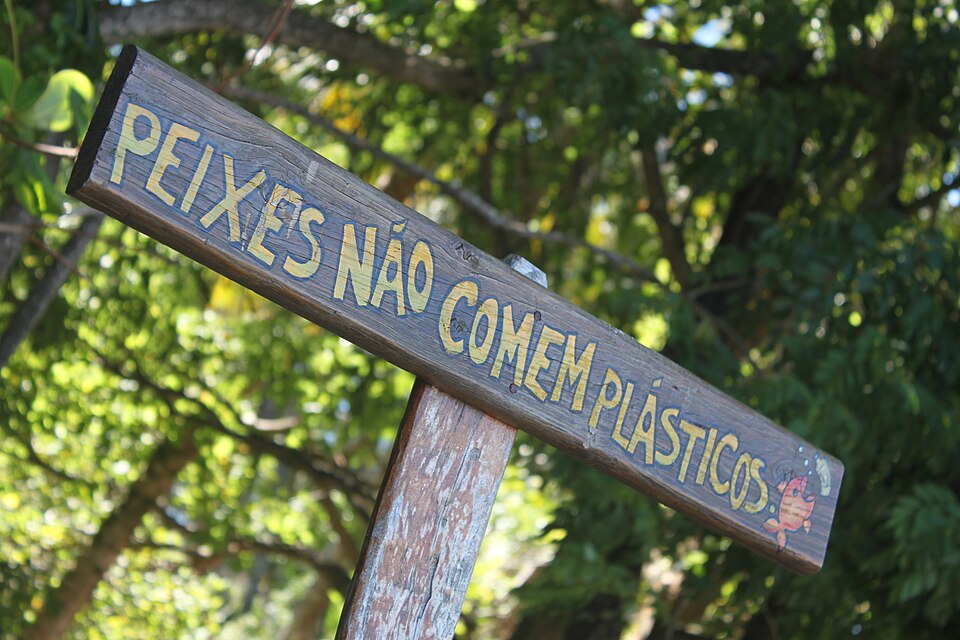
The reef is alive. Standing on coral kills it; feeding the fish changes their behavior; sunscreen with oxybenzone bleaches the polyps. The families of Moreré have lived from this sea for generations, and the pools are part of a marine protected area. Float, look, leave.
Frequently asked questions
Can I visit the Moreré pools without a boat?
Yes. Take the tractor or walk to Moreré, then hire a small local boat at the beach for the five-minute hop to the reef. Or, at a very low tide, some people wade out; ask a local first, because there are channels.
Are the pools good for children?
At a low tide below 0.4 m, yes: knee-to-waist depth, calm water. Keep them in water shoes and away from the reef edge, where the depth drops fast.
How do I check the tide table for Boipeba?
Search for the Brazilian Navy tide table (tábua de marés) for Morro de São Paulo, or ask us the night before; we keep the current month printed at the flats.
What is the best month for the natural pools?
September through March has clearer water and calmer sea. Within any month, the days around the new moon and the full moon have the lowest tides.
If you are choosing dates, check how to get to Boipeba first so your arrival day lines up with the boats, then have a look at our flats two minutes from the pier where the Moreré boats leave. For the wider picture, see the beaches of Boipeba and boat trips from Boipeba.