Ten past four, Boca da Barra, and the light has gone the color of a mango. You walked here in flip-flops from the pier in under three minutes, your sandals are still dry, and the woman at the shack is asking whether you want the coconut cold or room temperature. That is the first beach of Boipeba, and it is the one most people never leave. This guide is for the other five, too.
Boipeba is an island in the Cairu archipelago, on the southern coast of Bahia, with no cars. The beaches run down the eastern side in a chain, village to tip: Boca da Barra, Tassimirim, Cueira, Moreré, Bainema and Ponta dos Castelhanos. You walk, you take a tractor, a quad-bike taxi or a boat. Distances are short on the map and long in the sun, so each entry below tells you how to get there, what you will find, and whether it is your kind of beach.
The six beaches at a glance
| Beach |
From Velha Boipeba |
Shade |
Food |
Sea |
Best for |
| Boca da Barra |
2 min walk |
Almendra trees, shacks |
Yes, daily |
Calm, river mouth |
Families, sunset, first afternoon |
| Tassimirim |
20 to 30 min walk |
Coconut palms |
One shack, usually |
Calm |
Quiet swim, lobster lunch |
| Cueira |
40 to 45 min walk |
Coconut grove |
Guido's, seasonal |
Calm, clear |
A long lazy day |
| Moreré |
6 km, tractor or boat |
Some |
Village restaurants |
Calm, pools at low tide |
Snorkeling, staying a night |
| Bainema |
20 min walk past Moreré |
Little |
Occasional shacks |
Open, long |
Walking, being alone |
| Ponta dos Castelhanos |
Boat tour or quad |
Almost none |
Simple shacks on tour days |
Reef, pools |
The boat day |
Prices in this guide are in reais and were checked for 2025 and 2026. At the time of writing a US dollar buys roughly five and a half reais; check the rate before you go.
Boca da Barra: the village beach
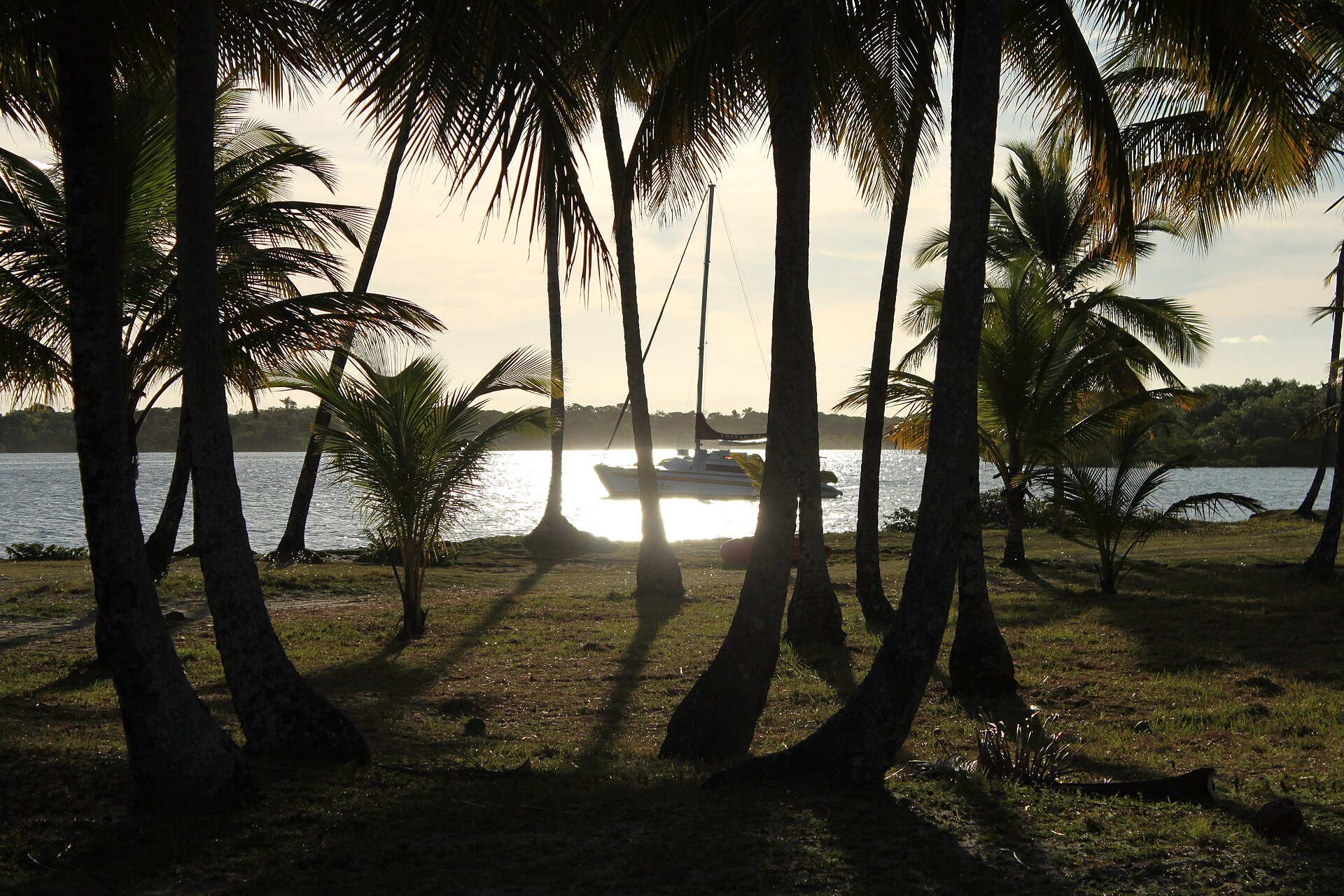
Boca da Barra means the mouth of the bar, where the Rio do Inferno meets the sea in front of the old village. The water is calm, the bottom is sand, and the beach curves so you can always see the boats coming in. This is where you will swim on the afternoon you arrive, because the pier is right there and so are we.
Getting there: walk to the end of the main street. From our flats it is two minutes, and you do not need shoes.
What you find: three or four shacks with plastic chairs, cold beer, grilled fish and the ubiquitous fried fish with pirão. Shade under almond trees. Kids in the shallows. At low tide a sand tongue appears and people walk out to photograph the river.
When to go: any time, but the sunset from the pier end of the beach is the daily event. In high season, from late December to Carnival, it fills up by eleven. In April to July it rains some afternoons and you may have it to yourself.
Who it is for: everyone on day one, families every day, anyone who wants a beer with sand underfoot without planning.
Tassimirim: the first quiet one
Keep walking south past the shacks of Boca da Barra and the beach becomes Praia de Pedrinhas, a short rocky stretch, and then opens into Tassimirim. Twenty to thirty minutes from the village on firm sand, an easy walk, with one small hill if the tide is high and pushes you up the path.
What you find: a long crescent lined with coconut palms, calm water, almost nobody. There is one beach shack that, on most days, serves lobster, shrimp bobó and fish stews, and it is the reason a lot of people make this their lunch beach. In low season it can be closed on a weekday, so carry water.
When to go: mid-morning, when the sun is still behind the palms. Come back the same way before dark; the path has no lights.
Who it is for: couples, readers, anyone who found Boca da Barra too social.
Cueira: the coconut cove
Fifteen minutes more along the sand and you reach Cueira, which is the beach that ends up on the postcards: a shallow cove, water clear enough to count your toes, and one of the largest preserved coconut groves on the island behind it. Forty to forty-five minutes total from the village.
What you find: a beach that stays shallow for a long way out, which is why it is calm enough for children and slow swimmers. A famous lunch: lobster in butter with banana at the shack run by Guido and his wife Eliana, an institution that operates mostly in season. Ask us whether it is open the week you are here.
When to go: full day. Bring a hat, because the shade is at the back of the beach, not at the waterline. If you plan to continue to Moreré on foot, leave Cueira by noon and check that the tide is going out.
Who it is for: the long lazy day, the photograph you will use as your phone background, families with small children.
Moreré: the second village and the natural pools
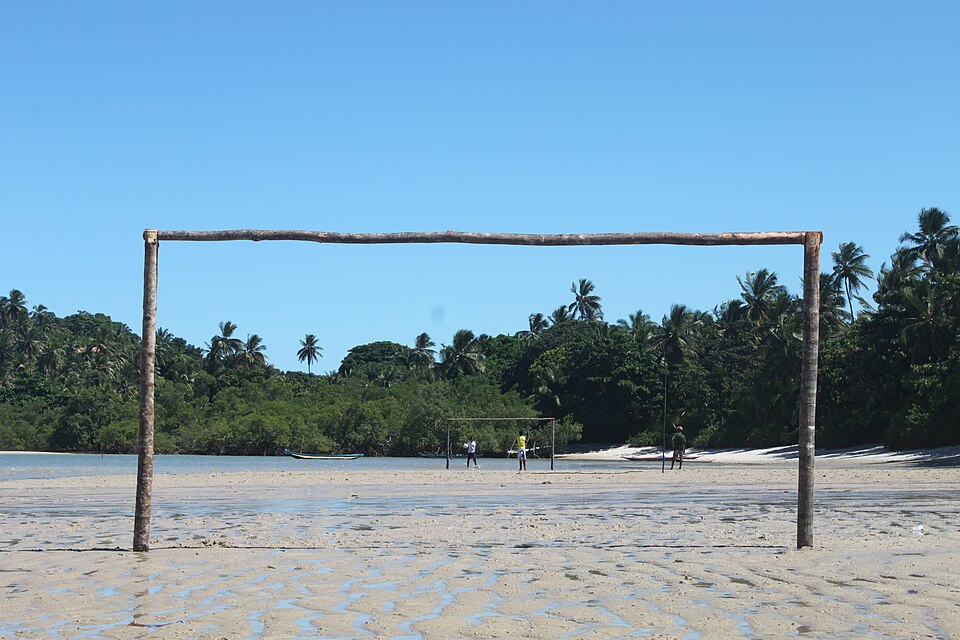
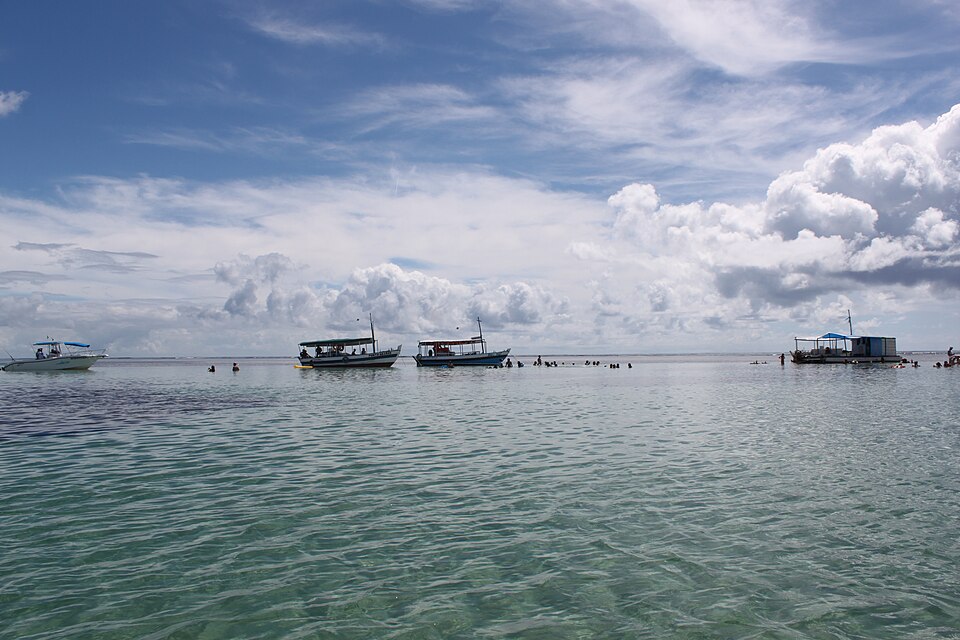
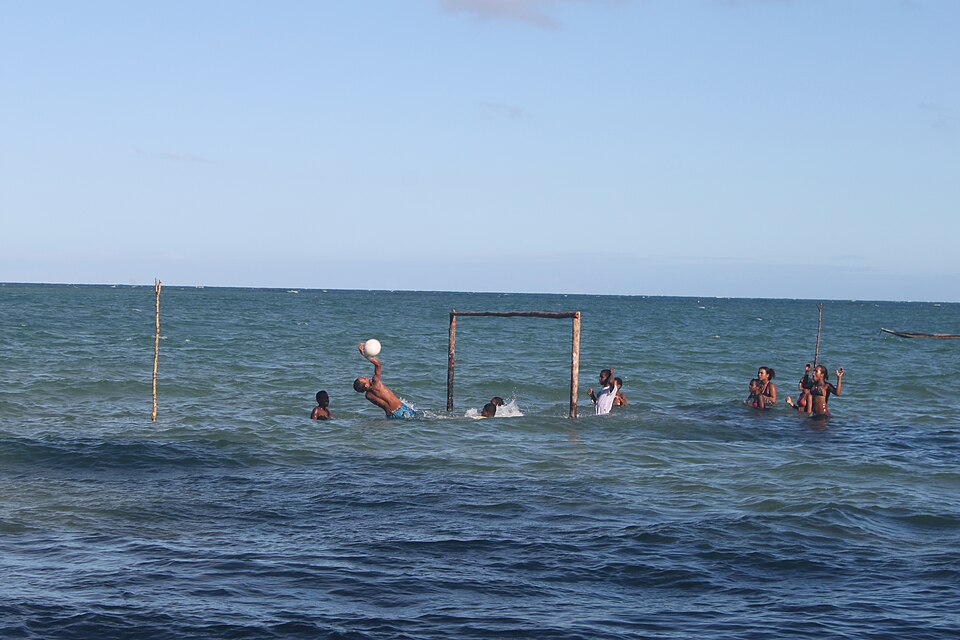
Moreré is the other village of the island, six kilometers south of Velha Boipeba. It has its own pousadas, a church, a football field between the palms and the reason most visitors come: at low tide, about a kilometer offshore, the reef drains into natural pools where you float over fish in water to your waist.
Getting there: you have four options.
- Tractor from Ponto da Tiririca at the back of the village, about R$15 per person each way in late 2025, thirty to forty minutes of bouncing through the interior. Cheap and fun once.
- Quad-bike taxi, R$25 to R$30 per person, or R$50 to R$60 for two, twenty minutes. Faster, dustier.
- Boat from the pier, twenty to thirty minutes on calm days, arranged the evening before.
- On foot along the beach at low tide, about two hours via Tassimirim and Cueira.
What you find: the pools appear only at low tide, for roughly two hours around the lowest point. Local boats take you out for a small fee, or you walk out when the water is very low. Bring reef shoes and do not stand on the coral. The village restaurants are simple and good: dishes for two like shrimp bobó around R$90 and fish moqueca R$ 90 to R$ 150 at the beach shacks, prices from late 2025.
When to go: read the tide table the night before. We cover how in our tides guide. On a spring-tide low around midday, this is the best beach day the island offers.
Who it is for: snorkelers, anyone who wants a night away from the main village, photographers at low tide.
Bainema: the long empty one
Walk south from Moreré for about twenty minutes and the beach turns into Bainema, a long open stretch where the sand goes on and the people do not. There is a simple shack at the beginning and, at the far end, two more where parties sometimes happen on holiday weekends. Otherwise it is you, the wind and the tide line.
What you find: space. Rougher sea than the coves, more current, so swim near other people and never at the river mouths. Little shade. Excellent walking at low tide, when the sand is packed hard.
When to go: morning, before the sun gets serious. Bring two liters of water per person. Tell someone where you went.
Who it is for: walkers, people who want a beach with no soundtrack.
Ponta dos Castelhanos: the tip of the island
The southern point of Boipeba takes its name from a Spanish galleon that wrecked on the reef in the 1500s, a story every boat captain tells slightly differently. Today the point is a lighthouse, a reef that forms pools at low tide, a beach of white sand, and the turnaround of the classic boat tour.
Getting there: the volta à ilha boat tour, which in 2026 costs about R$250 per person, leaves around nine and returns by four. It stops at the Moreré pools, Castelhanos, a sandbank and Cova da Onça, a fishing village on the river side. You can also reach the point by quad-bike taxi on the interior track, arranged in the village, or walk from Bainema in about an hour and a half at low tide if you are fit and it is early.
What you find: on tour days, simple shacks serving fish and beer; on other days, possibly nothing. Pools worth snorkeling at low tide. Serious sun.
When to go: with the tour, on a day when low tide falls between eleven and two. Ask us; we look at the table with you.
Who it is for: the boat day, snorkelers, anyone who wants to say they went to the end of the island.
Tides change everything here
Every beach on this list is a different place at high tide and at low tide. Cueira gets wider, Moreré grows pools, the walk from Tassimirim can vanish under water for a couple of hours. Before you plan a walking day, check the tide table for Boipeba; the Brazilian Navy publishes it and several apps repeat it. We keep a printed copy at the flats and the day's low tide written on the chalkboard by the door.
What to bring, whichever beach
- Water, more than you think, because only Boca da Barra has shops nearby.
- Cash in small notes for shacks; card machines depend on the phone signal that day.
- Reef-safe sunscreen and a hat with a brim.
- Reef shoes for Moreré and Castelhanos.
- A dry bag if you are walking the whole chain.
Our flats include a beach kit with chairs, an umbrella and a cooler, so you do not need to carry those. See the flats page for what each one has.
Perguntas frequentes
Which Boipeba beach is closest to the village? Boca da Barra. It starts at the end of the main street of Velha Boipeba, two minutes from the pier and from our flats.
Can I walk from Velha Boipeba to Moreré? Yes, along the sand at low tide, about two hours via Tassimirim and Cueira. At high tide parts of the route disappear, so check the tide table first and carry water.
Are there beach shacks with food on every beach? Not on all of them, and not every day in low season. Boca da Barra, Tassimirim, Cueira and Moreré usually have at least one open. Bainema and Castelhanos are hit or miss, so bring water and a snack.
Do I need a boat tour to see the beaches? No. Four of the six are reachable on foot from the village. The boat tour is the easy way to see Castelhanos and the Moreré pools in one day, at around R$250 per person in 2026.
If you want the village beach at your door and the rest within a walk, see the flats and then read how to get here, because the last boat leaves at four.